
Content
During a 2024 procurement audit, an East African distribution utility found that its three meter suppliers ran two proprietary prepayment platforms that could not read each other's tokens. Customers walked past nearby vendors to reach the single kiosk that sold credit for their specific meter brand, and collection costs climbed by roughly 11 percent. The utility's remedy was not another software patch; it was a migration to a single STS prepaid meter vending system. Futurise Technologies Co., Ltd., a smart metering and energy solutions provider founded in 2002 with more than 50 million metering devices installed globally, sees this fragmentation repeat in nearly every market it supplies.
An STS prepaid meter vending system is a standards-based platform that generates, encrypts, and dispatches 20-digit purchase tokens for STS-compliant prepayment meters.
However, STS being an open standard does not mean that any vending system can automatically recharge any STS meter. To generate valid tokens for a specific meter, the vending system must be authorized by the meter manufacturer or authorized system provider and have access to the corresponding Supply Group Code (SGC) and/or authorized vending keys required for token generation and encryption.
A complete vending system typically combines STS-compliant token generation, authorized cryptographic keys, and a commercial layer that records payments and delivers tokens to customers through agents, mobile platforms, or other sales channels.
Therefore, while the STS token format is standardized across manufacturers, successful token generation and recharge depend on having the correct authorization and cryptographic keys for the target meter. Once properly authorized, a vending system can generate valid STS tokens for the corresponding meters, regardless of where the meters are manufactured, provided they are STS-compliant and use the applicable key configuration.
An STS meter does not need a network connection to accept credit; it validates the token locally. This makes STS the default choice for rural electrification and postpaid-to-prepaid migration programs where cellular coverage is unreliable.
STS token generation follows a fixed cryptographic sequence that binds every purchase to the exact meter serial number that will consume the token.
The TID is the anti-replay mechanism. Because the meter remembers the latest TID it has accepted, a token generated today cannot be re-entered tomorrow. The STS Association now requires TIDI (Token Identifier Increment) support on new meters so that TID capacity extends past 2045; utilities buying meters in 2026 should confirm TIDI compliance in the specification sheet.
STS compliance is a revenue protection measure, not an administrative checkbox, because it eliminates meter lock-in, token replay, and manual reconciliation delays.
Proprietary prepayment platforms often look cheaper at tender stage, but they fail on three financial fronts: meter lock-in, key leakage, and the cost of changing suppliers.
| Feature | STS prepaid | Proprietary prepaid |
| Meter interoperability | Any STS-certified meter works with any STS vending system | Locked to a single supplier |
| Token security | Encrypted 20-digit token with TID replay protection | Vendor-specific; cloning risk when keys leak |
| Vendor switching | Re-tender with no meter change-out | Full meter replacement required |
| Regulatory acceptance | Recognized by utilities across Africa, South America, and the Middle East | Case-by-case approval |
| Lifetime roadmap | TIDI rollover defined by the STS Association | No defined long-term path |
A reliable STS deployment pairs certified meters with a vending layer and a headend system; the meter is where STS ends and data management begins.
Many utilities focus only on the meter and the POS software, but a complete project also includes a data concentrator, a headend system, and a billing interface. Futurise's HES platform receives meter reads, collects alarms, and feeds revenue reports into the utility's ERP, while the vending system remains the sole source of token generation.
 Futurise HES System for Utility Billing and Meter Data ManagementThis head-end platform collects meter reads, logs alarms, and feeds revenue reports into the utility's ERP, making it an essential link in a complete prepaid metering project.View Product →
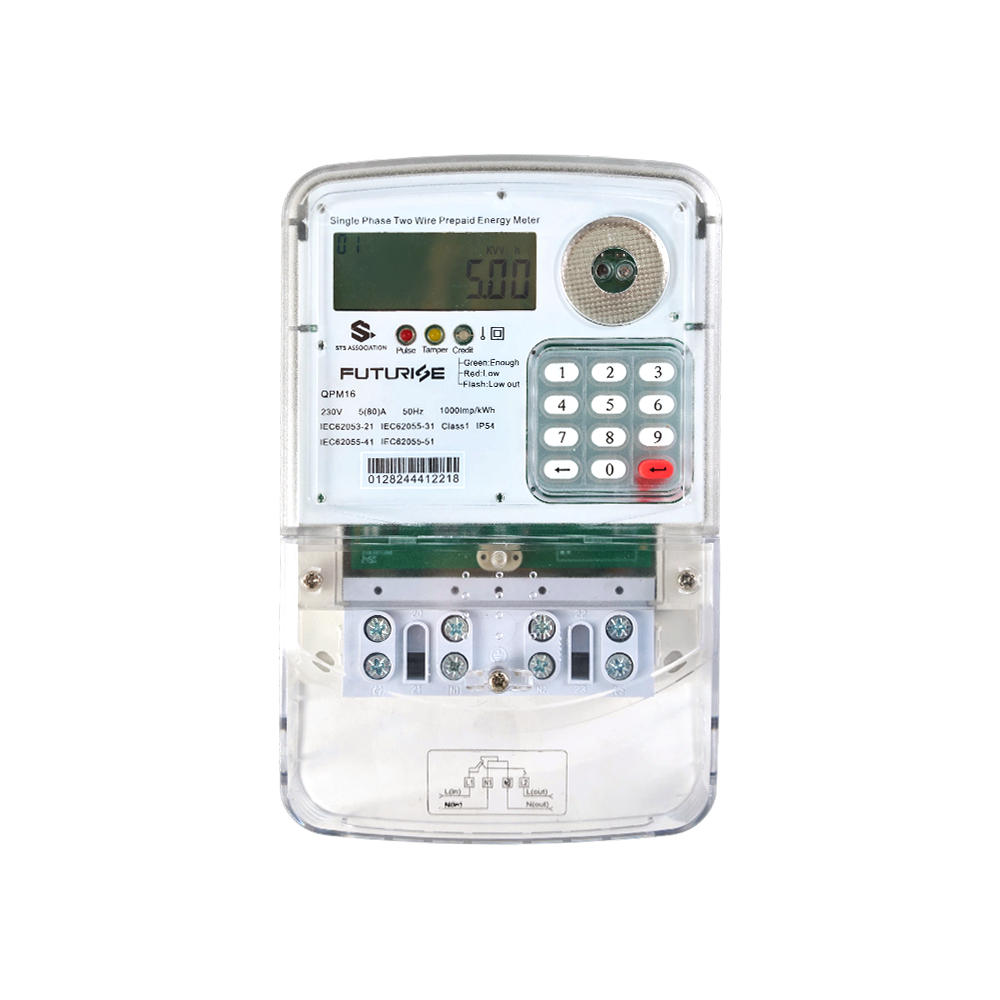
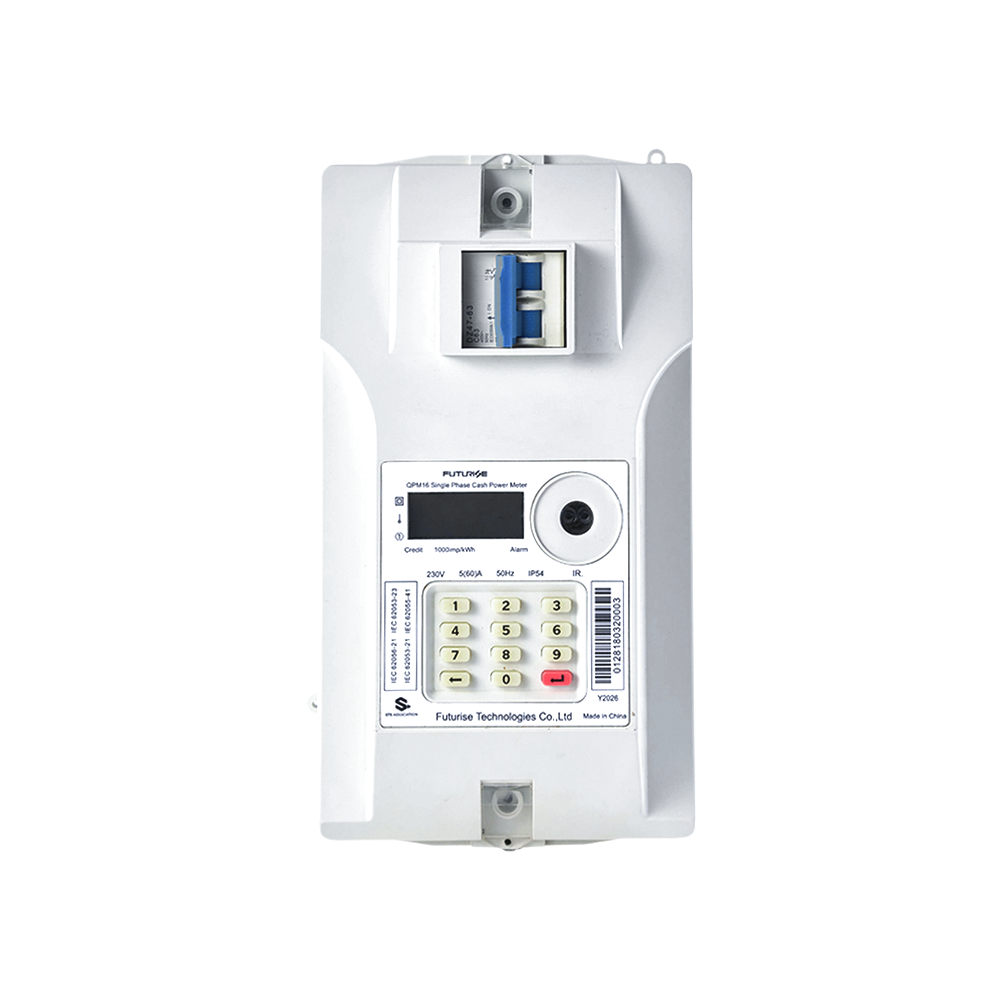
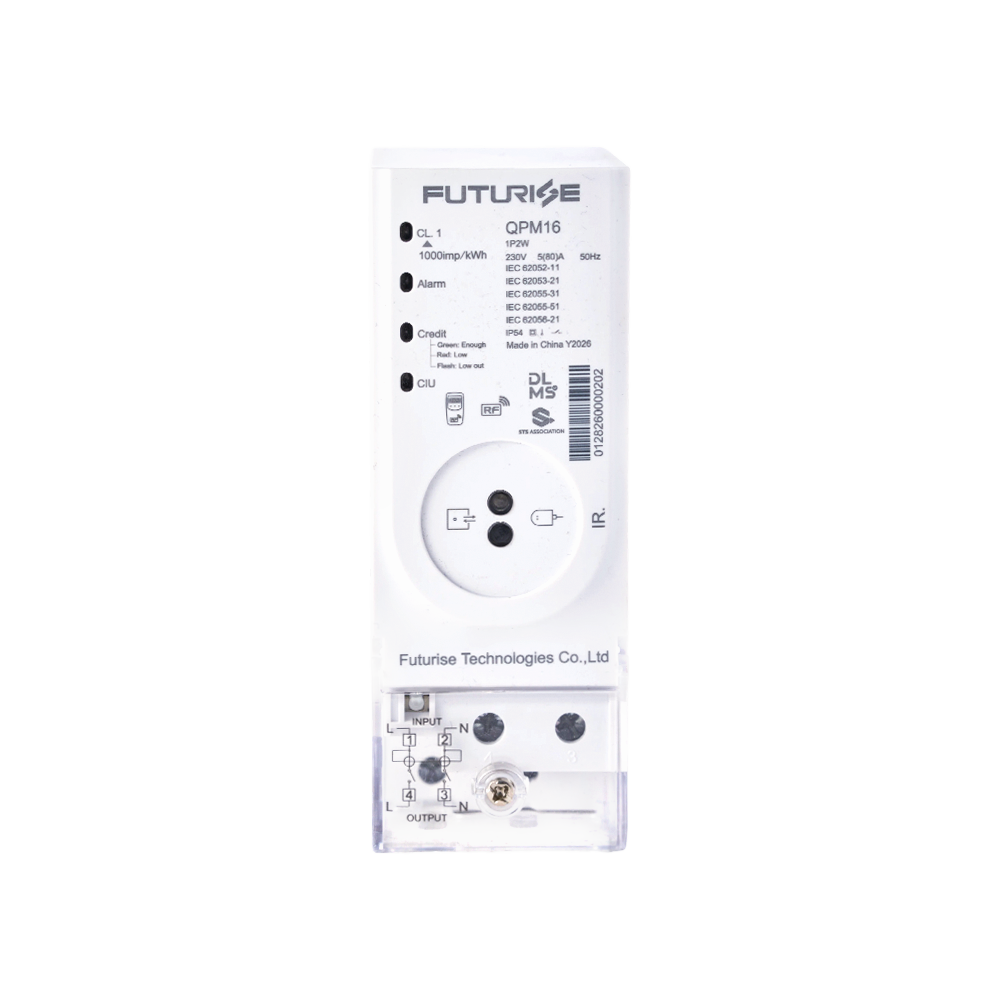
For residential rollouts, utilities commonly select single-phase STS keypad meters. The QPM16 series combines STS vending with DLMS/COSEM communication, so the same meter handles local token entry and remote reading.
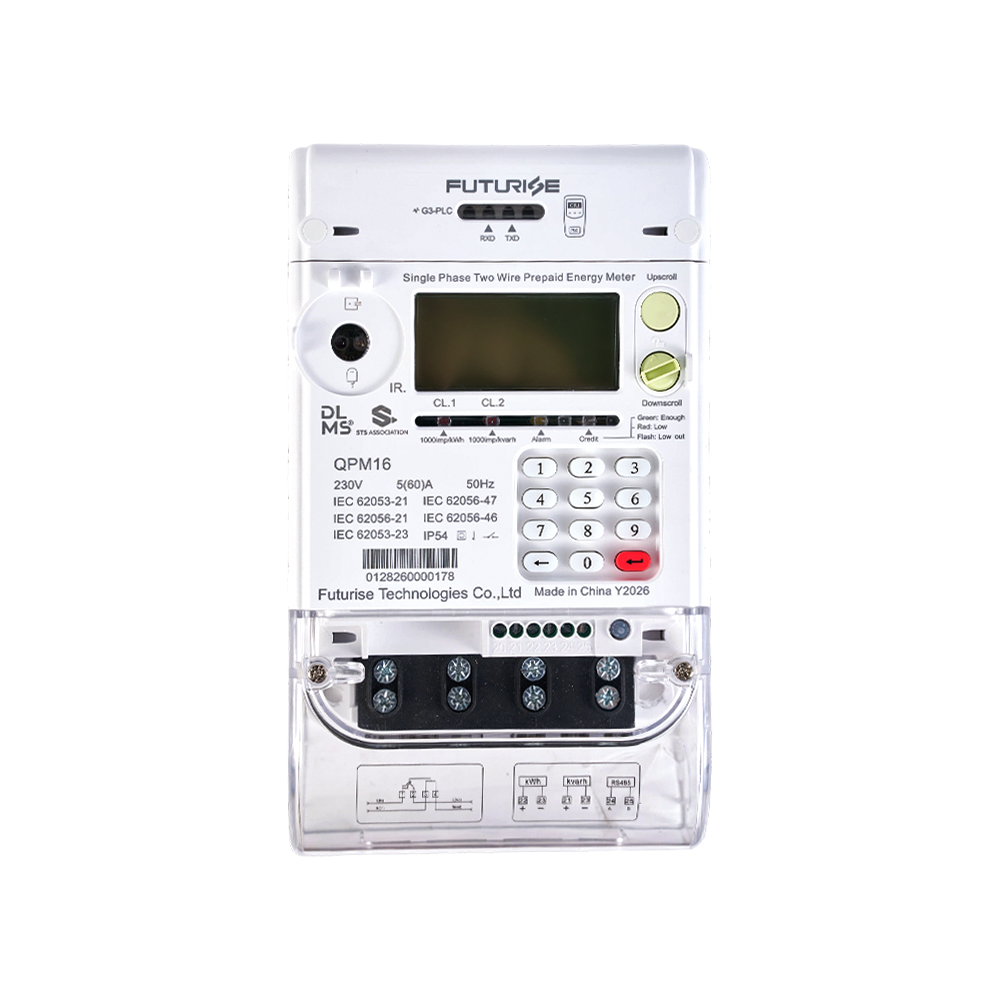 Futurise QPM16 Single-Phase STS Prepaid Keypad Meter with DLMS/COSEMDesigned for residential rollouts, this meter combines STS vending with DLMS/COSEM communication, enabling local token entry and remote reading in a single unit.View Product →
Commercial and industrial accounts draw more power, so they need three-phase STS meters with higher current ratings. The QPM163 series keeps the same STS token format while giving the utility load profiles for demand billing.
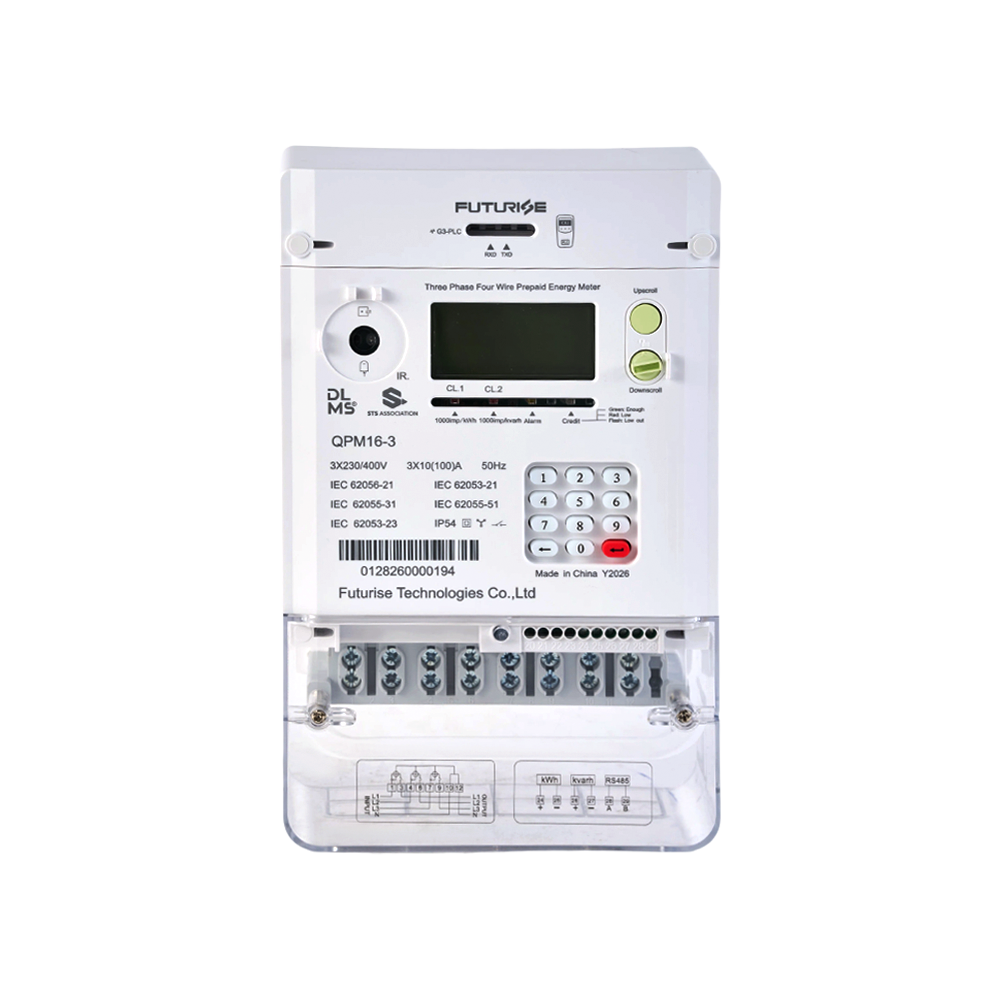 Futurise QPM16-3 Three-Phase STS Prepaid Keypad Meter with DLMS/COSEMBuilt for commercial and industrial accounts, this three-phase meter handles higher currents and provides load profiles for demand billing while keeping the same STS token format.View Product →
DLMS/COSEM is a communication protocol; STS is a credit transfer standard. They solve different problems. A meter that carries both certificates, like the QPM16, can vend credit locally and still stream interval data to the headend over a separate channel.
Successful STS deployments hinge on four things: certification, TID management, delivery channel design, and field support.
Regulators across Africa and South America increasingly treat international metering access standards as a licensing precondition, which makes STS a compliance requirement rather than a technology preference.
Yes, provided the meters are STS-compliant and the vending system has obtained the required authorization and cryptographic vending keys from each relevant meter manufacturer or authorized key owner.
A single vending system can then generate valid tokens for meters from different manufacturers according to their respective key configurations. This enables one platform to support multiple meter brands while maintaining secure and authorized token generation.
TID stands for Token Identifier, a sequence value derived from the current time. It prevents token replay and meter resets. Vending software that does not track the last TID per meter will issue tokens the meter rejects at the keypad.
No. STS tokens are entered manually on a keypad, so the meter functions without any communication network. Communication modules, when fitted, only serve remote reading, alarms, and remote disconnect.
The HES manages data, not credit. It collects consumption, processes alarms, and sends disconnect commands; the vending system is the only component authorized to create credit tokens. Keeping these roles separate protects revenue and simplifies audits.
Share:


 English
 Français