
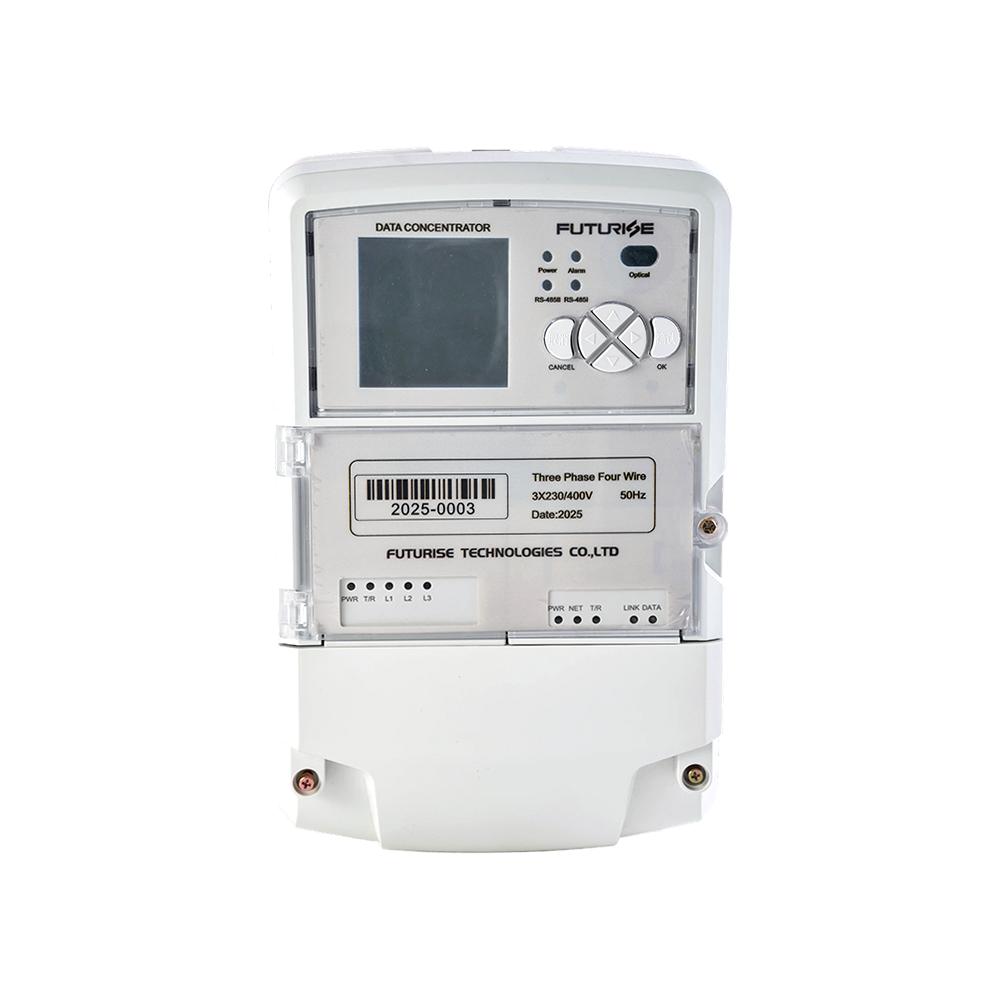
The evolution of smart grid technology has fundamentally transformed how utilities collect, process, and manage energy consumption data. At the heart of this transformation lies the data concentrator unit (DCU)—a sophisticated device that serves as the central nervous system of Advanced Metering Infrastructure (AMI). Unlike simple data loggers that merely store information, modern DCUs are intelligent communication gateways that aggregate data from hundreds or thousands of smart meters, perform preliminary processing, and transmit actionable insights to utility head-end systems. This article examines the architecture, functionality, and application scenarios of data concentrator units, with a particular focus on the single-phase and three-phase solutions offered by FUTURISE.
Understanding the Role and Architecture of Data Concentrator Units
A data concentrator unit operates as a bidirectional communication bridge between the utility's control center and the distributed network of smart meters deployed across residential, commercial, and industrial premises. The DCU is typically installed on the low-voltage side of distribution transformers, where it can efficiently communicate with meters within its designated network zone. Its primary responsibilities include automated meter reading, data validation and storage, network management, and remote device configuration.
The architecture of a modern DCU comprises several key components working in concert. The main processing unit coordinates all operations, while multiple communication interfaces enable connectivity with both meters (downlink) and the head-end system (uplink). Memory modules provide local data storage, ensuring that consumption data is preserved even during network outages. A real-time clock maintains accurate time synchronization essential for time-of-use billing and load profiling. Additionally, modern DCUs incorporate robust security mechanisms, including AES-128 encryption and multi-level authorization, to protect sensitive utility data from cyber threats.
Founded in 2002, FUTURISE has established itself as a professional provider of smart metering and energy solutions, with its data concentrator unit portfolio representing a core component of the company's AMI offerings. The company's DCU solutions, including the QCJZQ-I three-phase and QCJZQ-II single-phase models, are engineered to meet the rigorous demands of utility-grade deployments across Africa, South America, and the Middle East. With more than 50 million meters installed globally, FUTURISE brings extensive field experience to the design and deployment of data concentrator units in diverse grid environments.
Core Functions of a Data Concentrator Unit
- ✓ Automated data collection: Executes scheduled meter reading tasks at configurable intervals, eliminating manual reading processes.
- ✓ Multi-protocol communication: Supports diverse downlink channels including PLC, RF, and RS-485, plus uplink via GPRS, 3G, 4G, and Ethernet.
- ✓ Secure data storage: Non-volatile memory ensures data preservation during power interruptions, with automatic power-off protection.
- ✓ Remote device management: Supports over-the-air firmware updates and parameter configuration for both the DCU and connected meters.
- ✓ Network diagnostics: Real-time monitoring of communication quality, automatic self-testing, and exception event reporting.
FUTURISE QCJZQ-II Single Phase Data Concentrator Unit
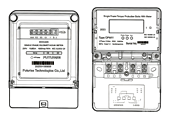
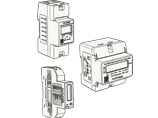
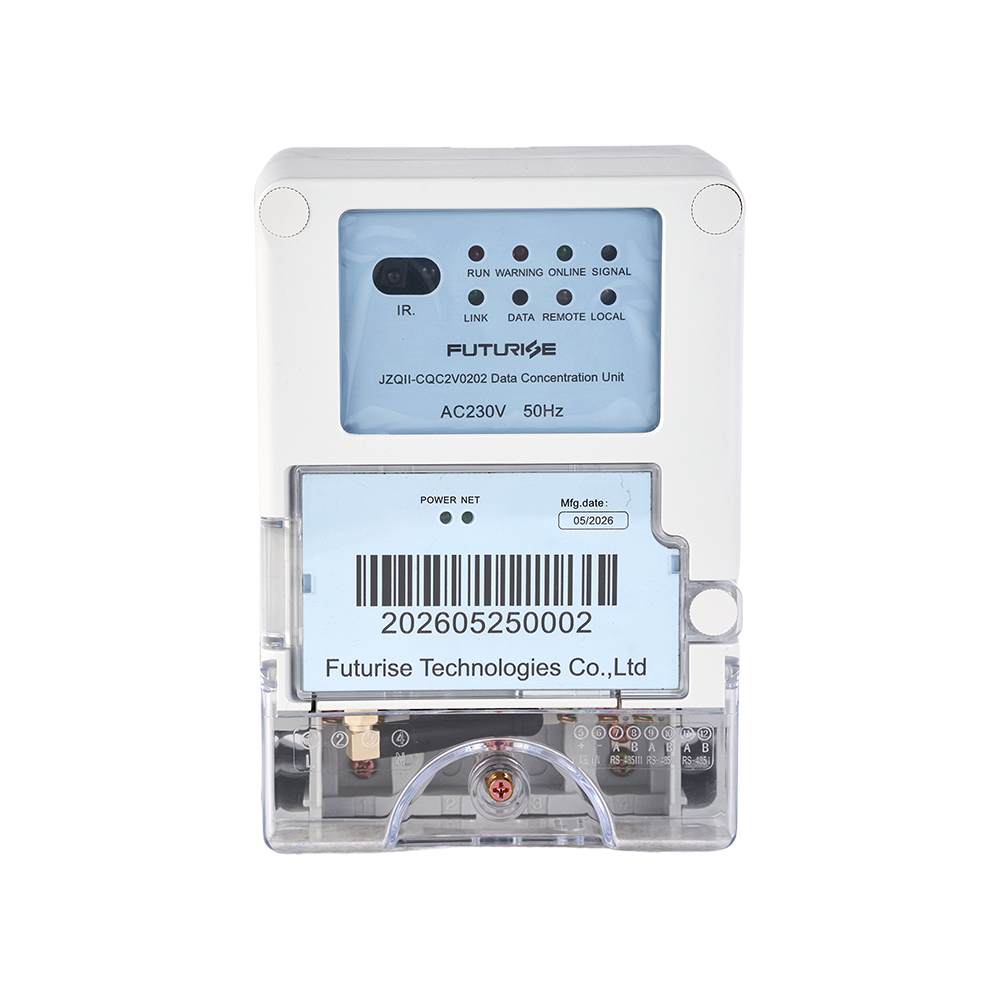
The QCJZQ-II single-phase data concentrator unit is engineered specifically for single-phase power distribution networks, serving as a centralized data hub for residential and light commercial metering applications. This compact unit supports up to 32 energy meters, making it ideal for small to medium-scale AMI deployments in residential communities, apartment complexes, and commercial buildings. Its lightweight form factor and flexible DIN-rail or wall mounting options enable efficient installation in tight corridor panels and distribution cabinets.
Communication architecture of the QCJZQ-II features a versatile multi-tier downlink configuration. It hosts local communication matrices including multi-protocol PLC for grid-wired data transmission, RF wireless bands for hard-to-reach meter clusters, and dual RS-485 serial communication configurations supporting separate reading and cascading baud structures. For uplink connectivity, the unit supports GPRS, 3G, 4G, and Ethernet networks, ensuring reliable data transmission to the utility's head-end system regardless of local infrastructure availability.
Data security and reliability are prioritized through comprehensive security logic and non-volatile memory implementation. The QCJZQ-II executes automatic power-off data protection to ensure billing logs are fully locked when the grid drops, preventing data loss during unexpected power interruptions. The unit also supports multi-level security and AES-128 bit encryption for all communication channels, safeguarding against unauthorized access and cyber threats.
Key applications of the QCJZQ-II include residential estates where automated meter reading eliminates manual reading costs and errors; apartment complexes where centralized data collection simplifies billing and dispute resolution; and small commercial buildings requiring sub-metering and energy monitoring capabilities. The unit's compatibility with DLMS/COSEM protocol ensures seamless integration with existing utility infrastructure and vending systems.
QCJZQ-II Technical Specifications
- 1 Maximum meter capacity: Supports up to 32 energy meters for small to medium-scale deployments.
- 2 Communication interfaces: Uplink: GPRS/3G/4G/Ethernet; Downlink: PLC/RF/RS-485; Local: IR port for field configuration.
- 3 Operating conditions: Temperature range -25°C to +65°C; IP54 protection rating; ≤85% humidity.
- 4 Dimensions and weight: 73 × 112 × 159mm; Net weight 0.7kg; Gross weight 0.9kg.
FUTURISE QCJZQ-I Three Phase Data Concentrator Unit
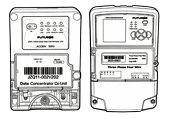
The QCJZQ-I three-phase data concentrator unit is designed for high-capacity AMI deployments in commercial, industrial, and utility-scale applications. This robust unit supports up to 200 energy meters, making it suitable for large residential communities, commercial complexes, industrial facilities, and grid infrastructure monitoring. Its heavy-duty IP54 weather-resilient casing ensures reliable operation across tough environmental conditions, with an operating temperature range of -25°C to +65°C.
High-density grid coordination is a key feature of the QCJZQ-I, which is robustly scaled to handle a massive downlink fleet of up to 200 distinct energy meters. The unit conforms to universally rigorous DLMS/COSEM communication protocol rules, enabling seamless interoperability with diverse meter types and head-end systems. It executes automated meter data collection, secure local data archiving, and round-the-clock power parameter monitoring, providing grid operators with comprehensive visibility into distribution network performance.
Cryptographic data security is fortified with an elite multi-level authorization algorithm and AES-128 bit chip-level encryption, ensuring all uplink pipelines (4G, GPRS, fiber optic, Ethernet) remain immune to external intrusion. The unit supports multiple uplink communication channels including GPRS, 3G, 4G, Ethernet, and fiber optic, paired with downlink access through PLC, RF, combo PLC+RF, and RS-485. This multi-channel architecture provides redundancy and ensures data transmission continuity even if one communication path fails.
Key applications of the QCJZQ-I include utility-scale AMI networks requiring centralized control for thousands of meter fleets; industrial power audits where sub-metered loads must be tracked across multiple production lines; renewable microgrids requiring synchronization of distributed generation with demand-side data; and smart city infrastructure where the DCU integrates with street lighting and EV charging networks.
QCJZQ-I Technical Specifications
- 1 Maximum meter capacity: Supports up to 200 energy meters for large-scale deployment programs.
- 2 Communication interfaces: Uplink: GPRS/3G/4G/Ethernet/Fiber optic; Downlink: PLC/RF/Combo PLC+RF/RS-485.
- 3 Operating conditions: Temperature range -25°C to +65°C; IP54 protection rating; ≤85% humidity.
- 4 Dimensions and weight: 176 × 135 × 116mm; Net weight 2kg; Gross weight 4kg.
Comparative Analysis of Single-Phase and Three-Phase Data Concentrator Units
The choice between single-phase and three-phase data concentrator units depends on the specific requirements of the deployment environment, including the scale of the metering network, the type of grid infrastructure, and the communication needs of the utility. The following table provides a comparative overview of the QCJZQ-II and QCJZQ-I models:
| Feature |
QCJZQ-II (Single Phase) |
QCJZQ-I (Three Phase) |
| Meter Capacity |
Up to 32 meters |
Up to 200 meters |
| Uplink Communication |
GPRS/3G/4G/Ethernet |
GPRS/3G/4G/Ethernet/Fiber |
| Downlink Communication |
PLC/RF/RS-485 |
PLC/RF/Combo PLC+RF/RS-485 |
| Operating Temperature |
-25°C to +65°C |
-25°C to +65°C |
| Protection Rating |
IP54 |
IP54 |
| Dimensions (mm) |
73 × 112 × 159 |
176 × 135 × 116 |
| Weight |
0.7kg (net) |
2.0kg (net) |
| Primary Application |
Residential, light commercial |
Utility, industrial, large commercial |
How to Select the Right Data Concentrator Unit for Your Project
When evaluating data concentrator units for metering projects, procurement teams and utility managers should consider the following criteria to ensure optimal system performance and long-term reliability:
- ✓ Meter capacity: Determine the number of meters to be connected and select a DCU with sufficient capacity for current and future needs.
- ✓ Communication compatibility: Verify that the DCU supports the communication protocols (PLC, RF, RS-485) used by existing or planned smart meters.
- ✓ Environmental resilience: Assess operating temperature range, humidity tolerance, and ingress protection rating for the deployment environment.
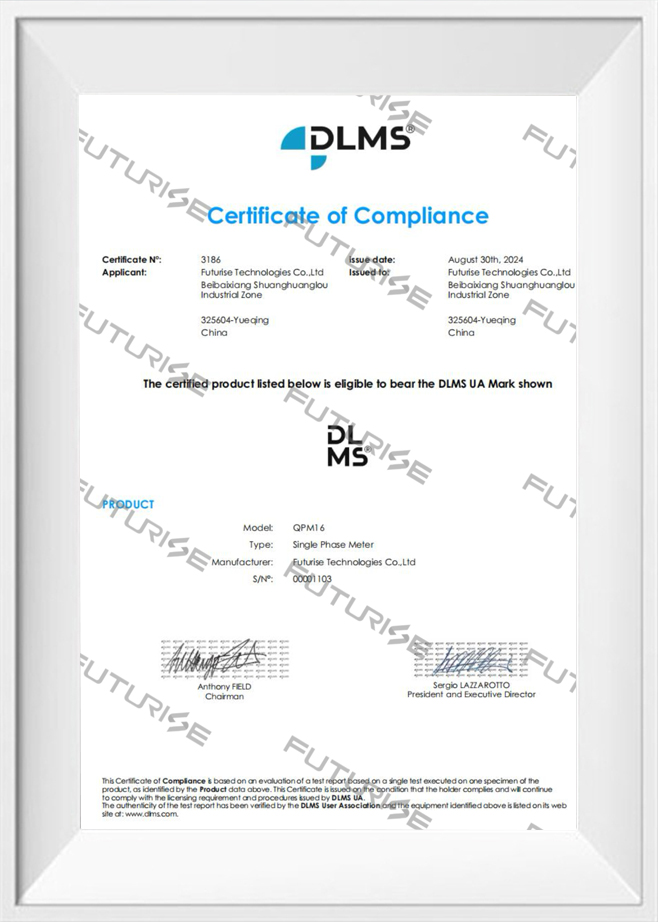
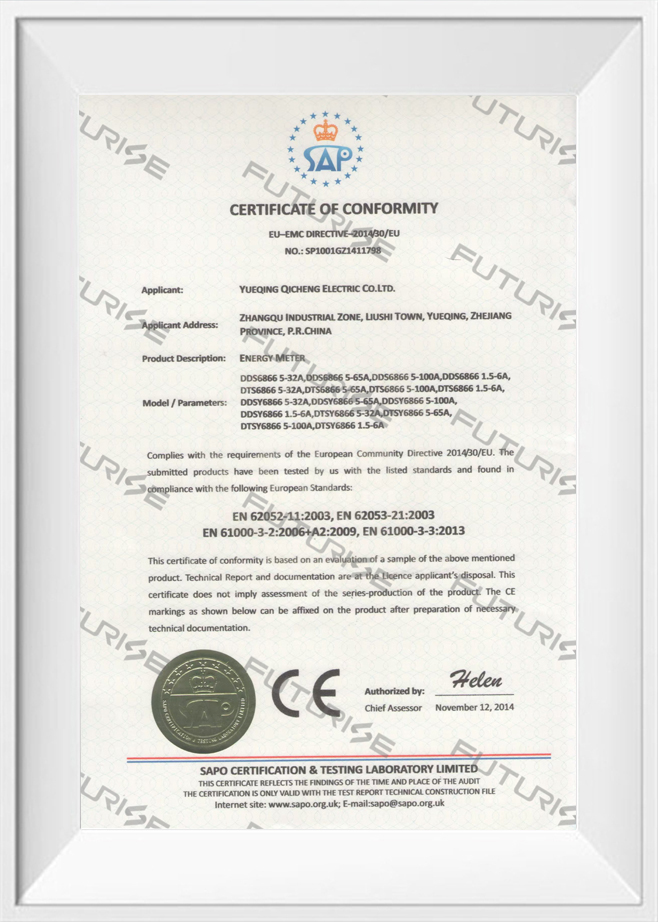
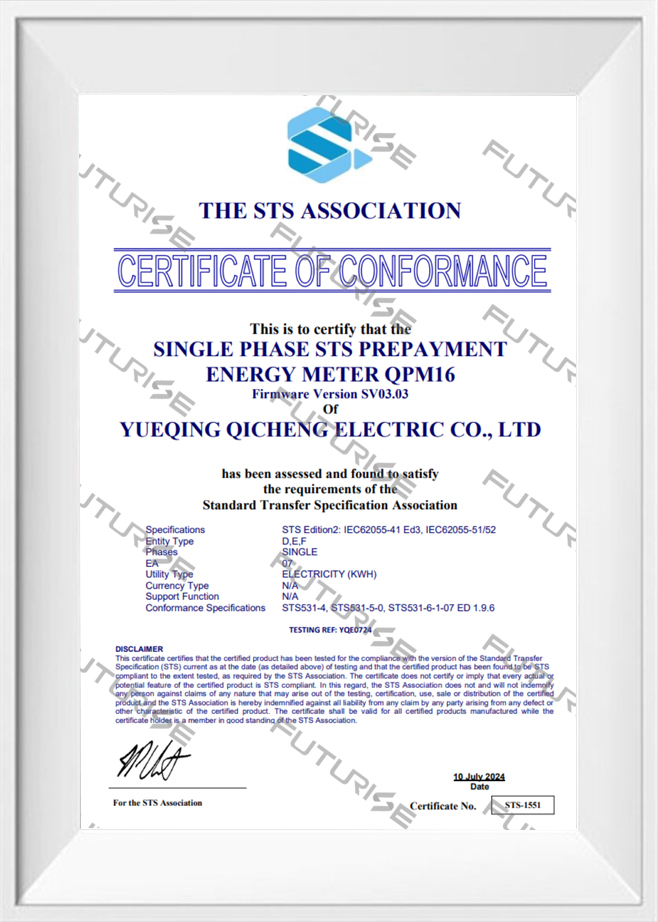
- ✓ Standards compliance: Verify DLMS/COSEM, IEC 62052, and relevant regional standards to ensure regulatory acceptance and interoperability.
For detailed product specifications, technical documentation, or custom solution inquiries, visit the data concentrator unit product page to explore the full portfolio of single-phase and three-phase DCU solutions from FUTURISE.
Frequently Asked Questions
Q1: What is a data concentrator unit and why is it important in smart metering?
A data concentrator unit is a centralized device that collects, processes, and transmits data from multiple smart meters to the utility's head-end system. It is critical for automated meter reading, enabling remote data collection without manual intervention. Modern DCUs support bidirectional communication, allowing utilities to remotely configure meters, perform firmware updates, and monitor network health in real time.
Q2: What is the difference between a single-phase and a three-phase data concentrator unit?
A single-phase DCU, such as the FUTURISE QCJZQ-II, supports up to 32 meters and is designed for residential and light commercial applications. A three-phase DCU, such as the QCJZQ-I, supports up to 200 meters and is designed for utility-scale, industrial, and large commercial deployments. The three-phase unit offers higher capacity, additional communication interfaces (including fiber optic), and a more rugged enclosure for demanding environments.
Q3: What communication protocols do data concentrator units support?
Modern data concentrator units typically support multiple communication protocols. For downlink communication (to meters), they support PLC (Power Line Communication), RF wireless, and RS-485 serial interfaces. For uplink communication (to head-end systems), they support GPRS, 3G, 4G, Ethernet, and fiber optic. They also comply with DLMS/COSEM protocols for data interoperability.
Q4: What security features do data concentrator units include?
Data concentrator units incorporate multiple layers of security, including AES-128 bit chip-level encryption for data transmission, multi-level authorization algorithms for user access control, automatic power-off data protection to secure billing logs during power interruptions, and tamper detection for terminal cover breaches. These features protect against both cyber threats and physical tampering.
Q5: Can data concentrator units be upgraded remotely?
Yes, most modern data concentrator units support remote firmware upgrades. This enables utilities to deploy software updates, add new features, and address security vulnerabilities without physical site visits. FUTURISE's QCJZQ-I and QCJZQ-II both support local and remote upgrade capabilities, ensuring that the DCU remains current throughout its operational lifecycle.